


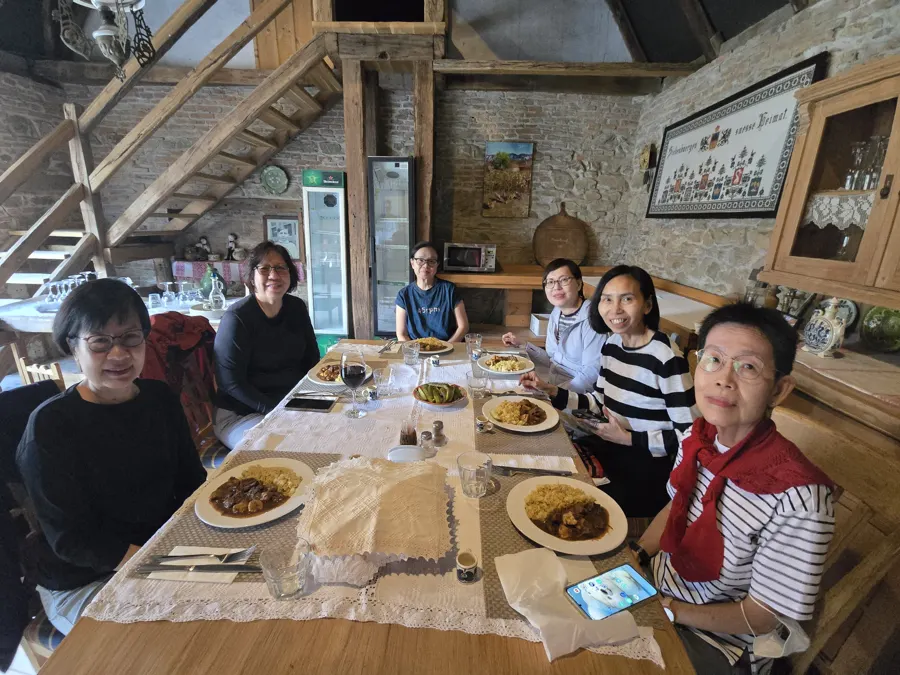
Dinner in a Saxon farmhouse
A proper, home-cooked meal in a restored village house.
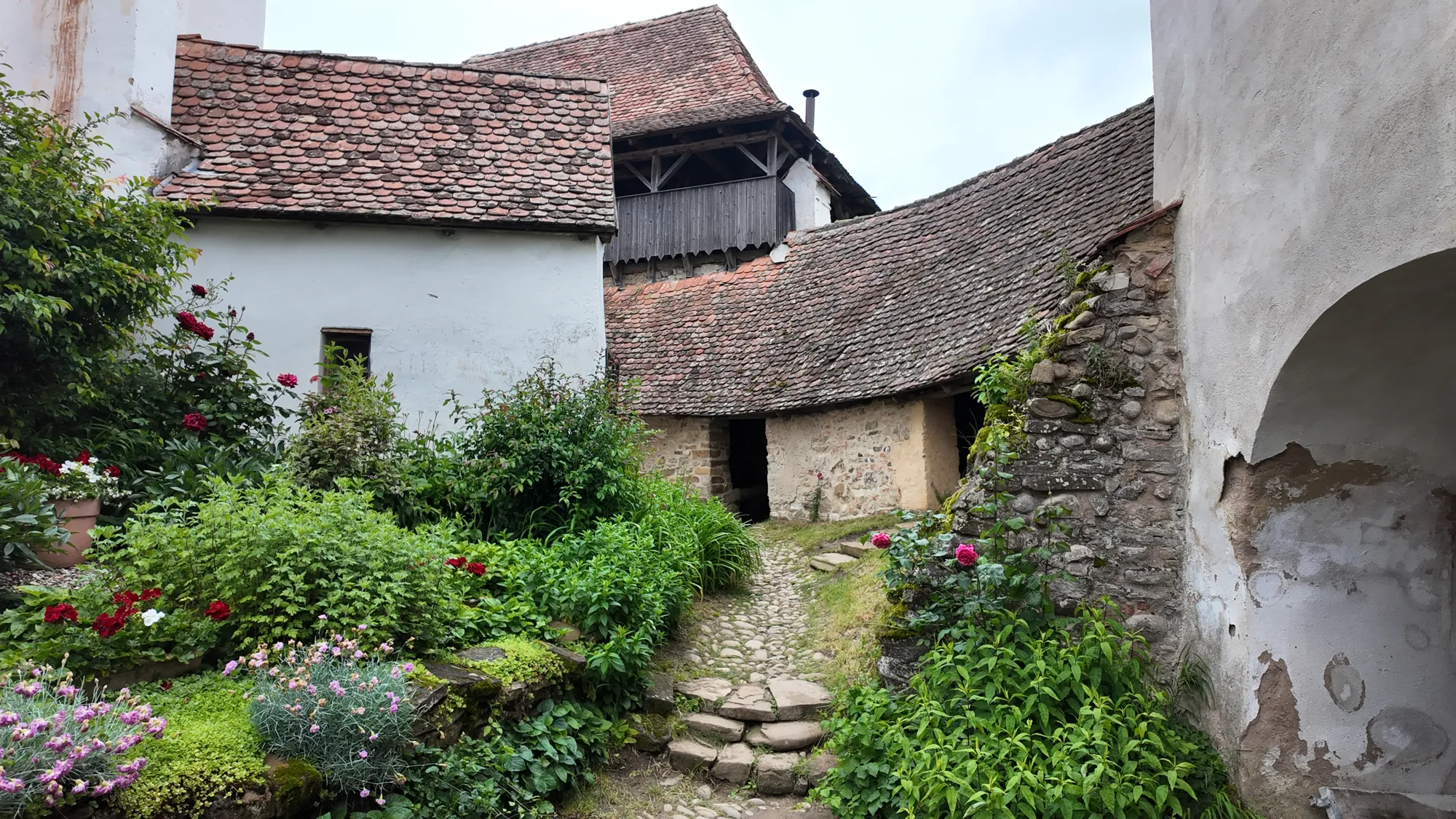
Fortified churches and villages shaped by Saxon hands
Scattered through the Transylvanian countryside are villages built by Saxon settlers who arrived some eight centuries ago: fortified churches on the hilltop, colourful houses along a single main street, and a way of life that still moves slowly.
Many of the Saxon families who once lived here have since left, but their houses, churches and traditions remain, cared for now by Romanian and Roma families and by conservation efforts that keep these villages standing rather than crumbling.
The Saxon villages feel distinct even within Transylvania. Each one is built around a single fortified church, usually visible from some distance, with a main street of long, colourful houses running out from it. The pace is unmistakably rural: geese cross the road, storks nest on the chimneys, and the loudest sound is often the church bell.
These villages carry a complicated history — built by Saxon settlers, largely emptied after they left in the 20th century, and now kept alive by newer residents and conservation work. That layered story is part of what makes a visit worthwhile.
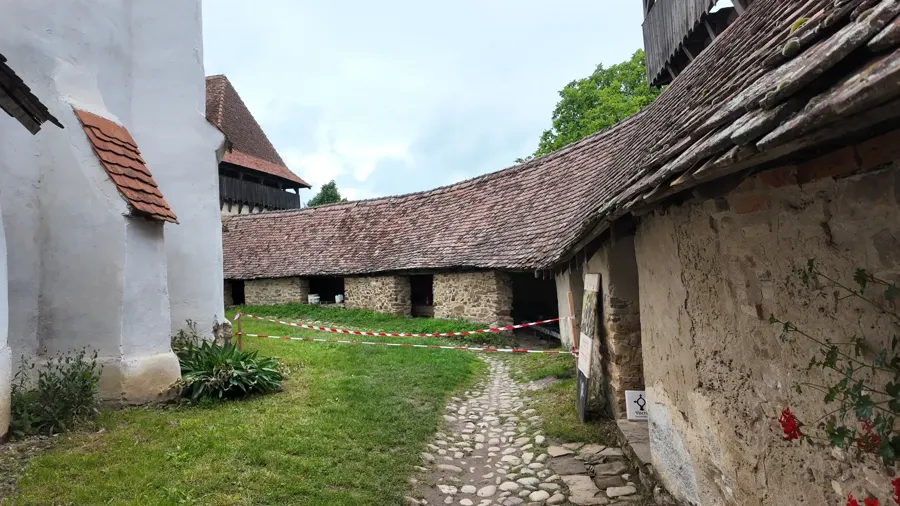

Any of them can be added to a private or tailor-made journey.
A proper, home-cooked meal in a restored village house.
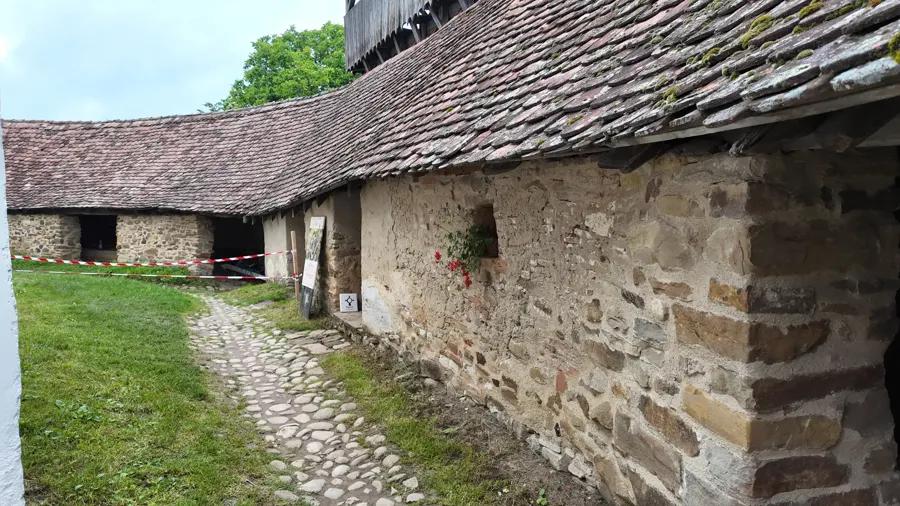
Stroll the stone lanes of Viscri, past painted houses and the fortified church, at the speed of village life.
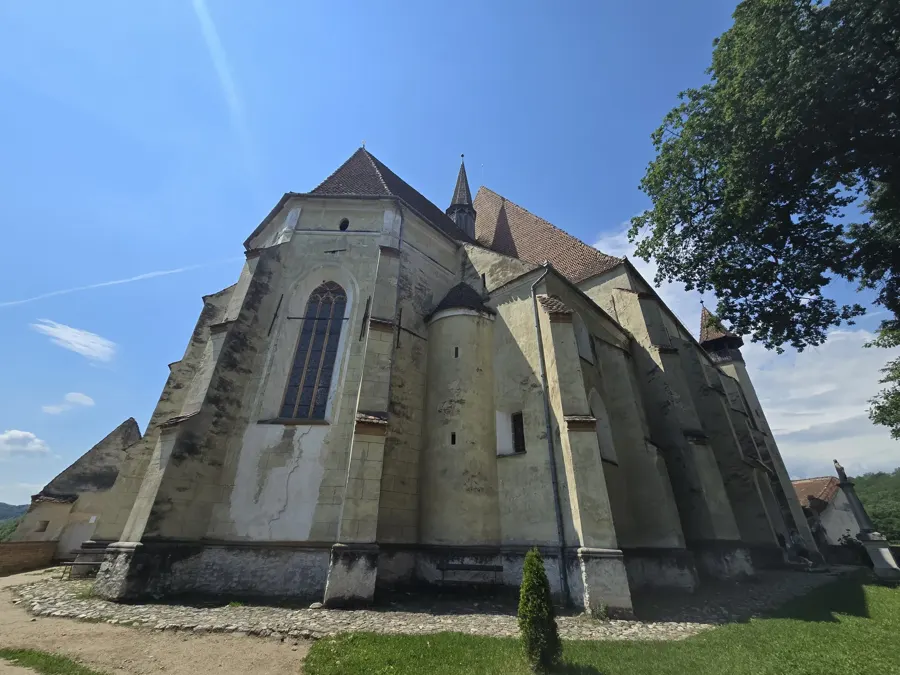
Explore one of the best-known fortified churches in Transylvania, a UNESCO World Heritage Site, with its walls, towers and covered stairway.
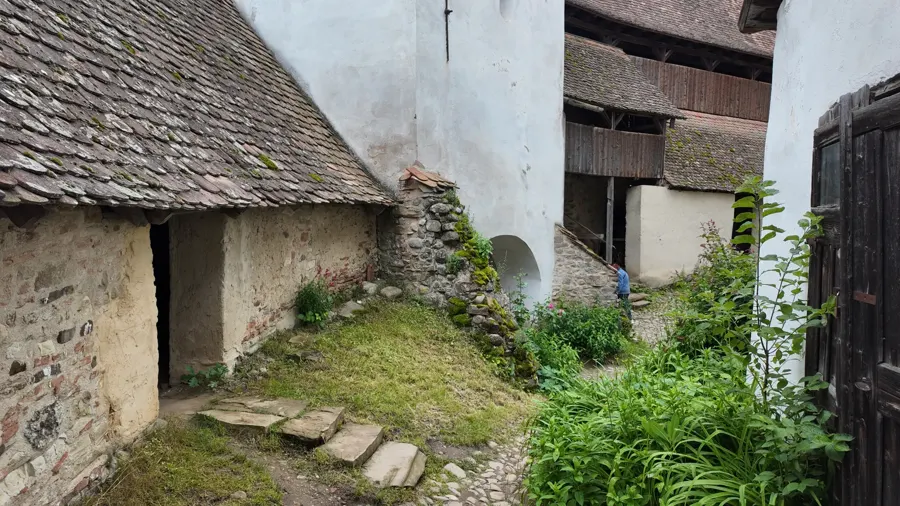
See how a Saxon village works: barns, kitchen gardens and the small things that make a place feel lived in.
These villages are best visited slowly, with time for a walk and a shared meal rather than a quick photo stop, and time to notice the details that give each one its own character. Build your trip and we'll arrange a small-group or private journey through the villages that suit your pace best.
Six days on the roads the coaches never take: Saxon villages, small family farms, a cellar with one winemaker, and dinners where th…
Dates on request
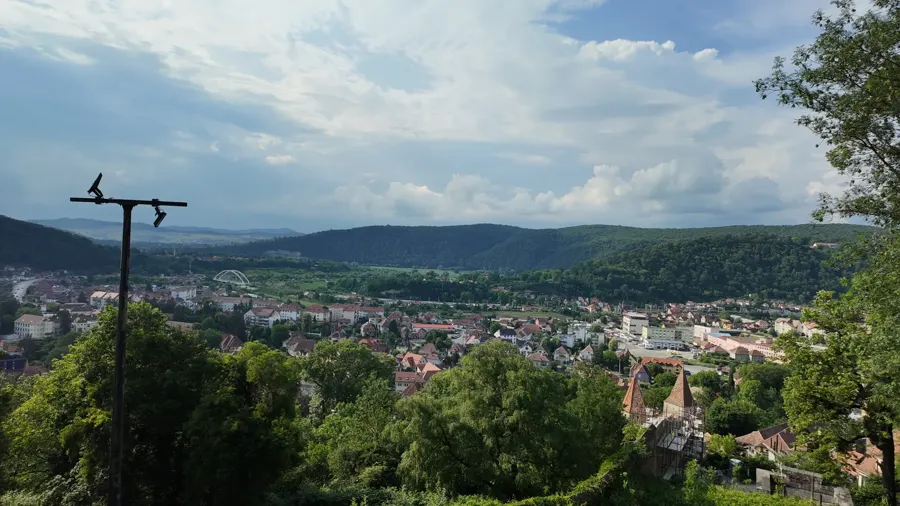
Six days through Bran, Peleș, Sighișoara and Brașov, with proper time in each place rather than a coach-window tour.
Next departure 17 Oct 2026 · places available
Meals in the Saxon villages tend to be homely and generous: soups, slow-cooked meats, fresh vegetables from the garden, and bread and cheese from nearby farms. Home-hosted dinners are a particular highlight, often served in a family courtyard alongside conversation about the village's history.
The Saxon villages of Transylvania were founded by German-speaking settlers who arrived from the twelfth century onward, invited to farm and defend the region's borders. Each village grew around a fortified church, built high enough to serve as a shelter for the whole community during raids, with thick walls, storerooms and lookout towers still visible today. Lutheran faith shaped community life for centuries, and many of these churches remain active Lutheran parishes despite a much smaller congregation than in the past. Most Saxon families left in the twentieth century, particularly after 1990, and the villages are now cared for largely by Romanian and Roma families alongside conservation organisations working to keep the churches and houses standing. Long, colourful house façades along a single main street remain one of the clearest signs of the villages' Saxon origins.
These villages sit within gentle, farmed countryside: open fields, orchards and hedgerows rather than dramatic scenery. Storks nest on chimneys and church towers through spring and summer, a familiar sight across the region, and swallows and other birds are common around the farmhouses. Walking trails connect several villages across open countryside, following farm tracks and quiet lanes rather than main roads. Orchards around villages such as Mălâncrav add colour and scent in blossom season, while harvest time in early autumn brings its own activity to the fields. Winters are quiet and can be snowy, with the fortified churches standing out clearly against bare, open land.

Late spring to early autumn is the easiest season, with green countryside, active farms and storks nesting on the rooftops. Summer evenings are especially pleasant for a slow walk through the villages. Autumn brings harvest activity and softer light; winters are quiet and can be snowy.
One to two nights allow time to properly explore two or three villages without rushing, including a home-hosted meal. The Saxon villages combine naturally with the rest of Transylvania or the Carpathians, forming a gentle, rural counterpoint to the region's larger towns.
Regions that go well with Saxon Villages: Transylvania, Maramureș, Bucovina.
Tell us how many days you have and what you enjoy. We'll shape the route around you — as a private journey or a tailor-made trip.
Build your trip in a few simple steps, or talk to us. We reply personally, with no obligation.
The villages are reached by road from Brașov or Sibiu, both with airports and a comfortable driving distance from the main sights. Onward journeys between villages are generally short but rural.
Roads narrow considerably closer to the villages, and some sections are shared with farm traffic. A relaxed pace suits the terrain far better than trying to cover several villages quickly.
Village streets and church approaches can include cobbles, grass paths and some steps, particularly around fortified church towers. Tell us about any mobility needs and we'll plan visits around them.
Late spring to early autumn is the easiest season, with green countryside and storks visible on the rooftops. Winters are quiet and can be snowy, which suits a stiller, slower visit.
Two or three villages in a day, with a home-hosted meal and time for a short walk, generally works well without feeling rushed. The itinerary can flex to a gentler or fuller pace.
Loading the weather…
Source: Open-Meteo

Autumn brings huge flocks of migrating birds to the Delta — a wonderful time to experience one of Romania's most remarkable nat…
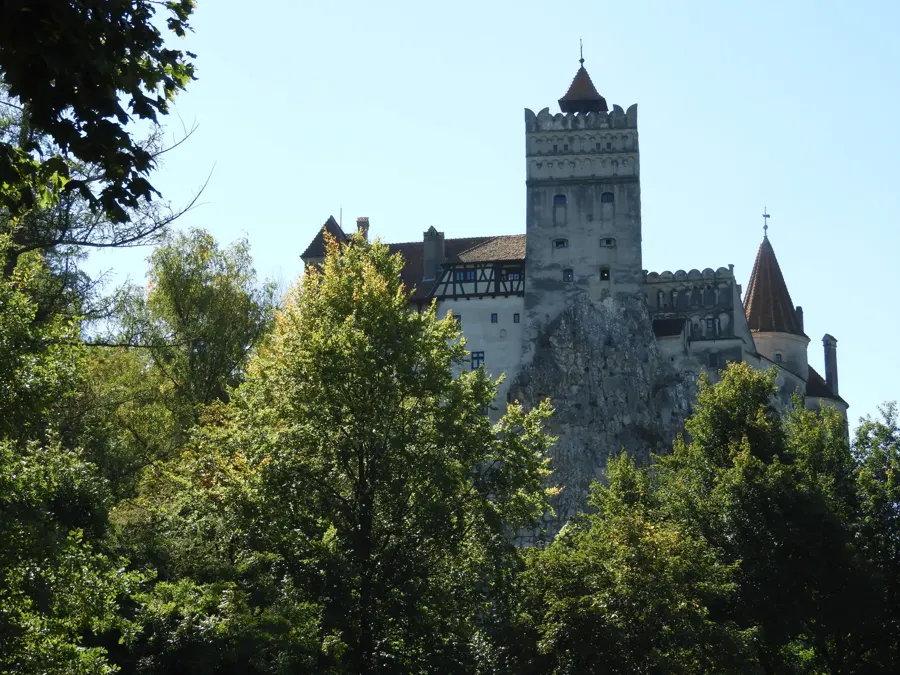
Experience Halloween at the home of the Dracula legend, with a festive dinner and optional evening celebrations.

The Grand Square comes alive with lights, music, carols and the warm scents of the Christmas season.
Tell us when you'd like to go, who's travelling and what you enjoy. We'll come back with a personal proposal, with no obligation.
Regions that travel well with Saxon Villages.

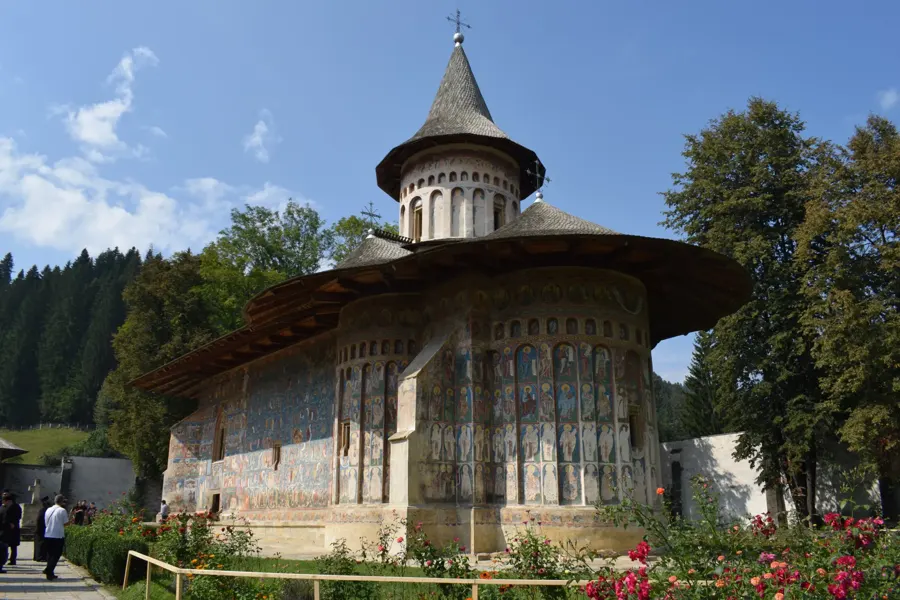
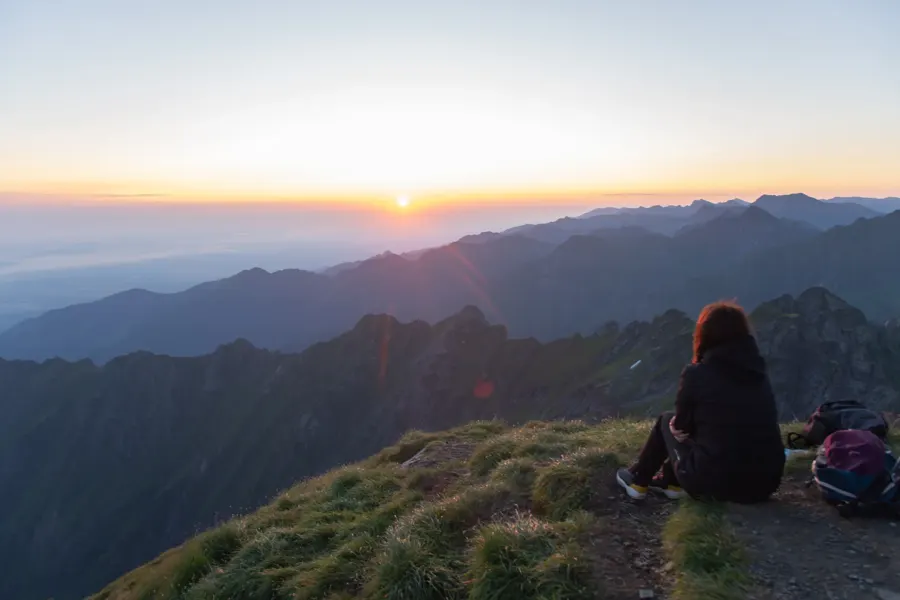

Midsummer flower crowns, medieval celebrations and Christmas markets filled with lights, music and the scent of cinnamon.
From Sibiu’s lights to village carols, a look at Romania’s Christmas markets and the traditions that surround them.

Spring blossom, golden autumns and snowy villages — why Romania is worth discovering in every season.
Get travel inspiration, new departure dates and special offers. No spam, unsubscribe any time.