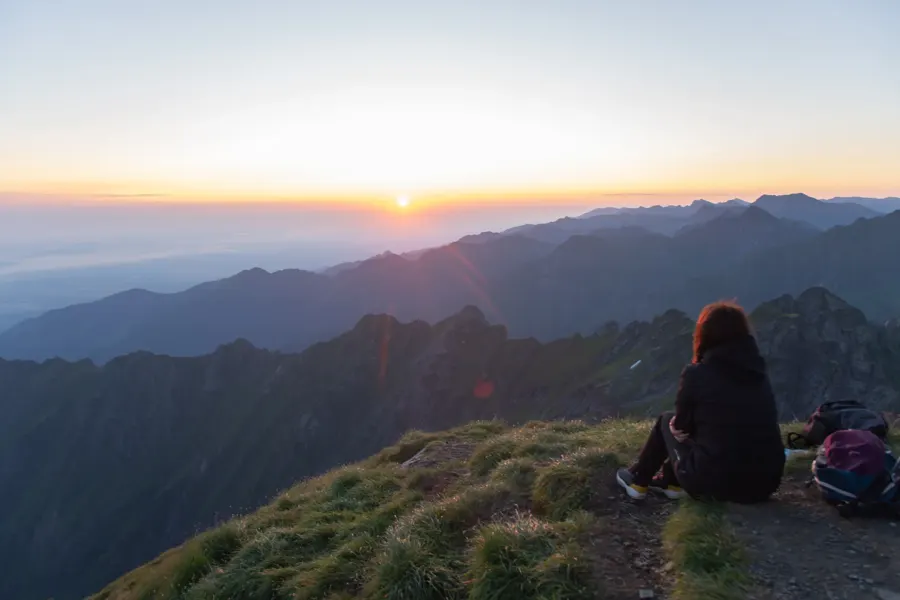


What to know about Romania's two most spectacular mountain roads, when they are typically open, and what makes each one worth the drive.
Ask any driver who has spent years on Romania's roads which two they would choose for a single unforgettable day, and the Transfăgărășan and the Transalpina come up again and again. Both wind high through the Carpathian Mountains, both reward genuine patience behind the wheel, and both are the kind of road that makes passengers stop talking mid-sentence to look out of the window. They are not, however, interchangeable, and it is worth understanding what sets each one apart.
The Transfăgărășan
Probably Romania's best-known mountain road, the Transfăgărășan cuts across the Carpathians and is famous for its dramatic hairpin bends and sweeping views. Along the way, it passes Lake Vidraru, held back by a striking dam, and climbs on towards Bâlea Lake, a glacial lake near the highest point of the route, often ringed by dramatic peaks even when the road itself is clear. The drive is as much about the journey as any single stop — a road that rewards frequent pauses simply to take in where you are.
The Transalpina
Further west, the Transalpina has a quieter, wilder character, and is generally considered one of the highest roads in Romania, climbing through open, sweeping mountain scenery with a real sense of remoteness in places. It sees noticeably fewer visitors than the Transfăgărășan, which suits travellers who prefer a more solitary mountain drive, with long views over ridgelines and valleys that feel a world away from Romania's towns and cities.
When they are open
Both roads are high mountain routes, and both are typically open only from around summer into early autumn — broadly from July through to October — depending entirely on snow and weather conditions that year. The precise opening and closing dates are announced annually and can shift earlier or later depending on conditions, so we would always recommend building some flexibility into a trip that includes either road, particularly towards the edges of that season, rather than treating the date as fixed.
Driving them well
Both roads demand a measure of concentration: narrow sections, sharp bends, and other vehicles — sometimes cyclists or motorcyclists enjoying the same views — sharing the same tarmac. This is precisely the kind of driving many of our travellers prefer to leave to an experienced local driver-guide, who knows the road's character, where the best stopping points are, and how to time the drive to avoid the busiest stretches of the day.
Choosing between them, or doing both
Some travellers manage both roads on a single well-planned trip, using one as an outward route and the other on the way back, with a few nights in the mountains or Transylvania in between to break up the driving. Others prefer to choose one and spend the time saved lingering longer at the lakes and viewpoints along the way. Either approach can work well within a private itinerary built around your pace.
Planning around the season
Because opening dates depend on snow rather than the calendar, we keep an eye on the season's conditions and build in flexibility so a mountain-road detour never becomes the fragile centrepiece of an otherwise fixed itinerary.
If a great mountain drive is on your list for Romania, build your trip and tell us when you are hoping to travel, or take a look at our tours to see how these roads typically fit into a wider Transylvania itinerary.